Online Casino Bonuses in Canada: Deposits, Free Spins and No Deposit Offers

Finding a reliable casino that fits a modest budget is easier than ever for players across Canada. Whether you prefer to start with a 5 dollar deposit casino or want the flexibility of a 1 deposit casino canada platform, the market now caters to almost every bankroll. Mid-range options such as a 20 deposit casino also remain popular, since they usually unlock larger welcome packages without demanding a serious commitment.

Progressive deposit structures are another smart way to spread your spending. A 2 deposit casino canada welcome ladder lets you claim rewards in stages, and many sites pair it with a 3 deposit casino package that adds extra spins or bonus cash on top. Some promotions even advertise 150 free spins for 1 dollar, which is a great way to test a new platform with almost no risk.

No deposit offers are especially attractive because they require no payment at all. A 20 no deposit bonus canada promotion can give you a real feel for the game library, while a 10 free no deposit casino bonus is often the entry point for newcomers. If spins are more your style, a 25 free spins no deposit canada deal works well. Bigger headline gifts exist too, including a 100 free chip no deposit canada reward and even a 300 free chip no deposit casino canada package for players who want a longer session.

Free spin promotions remain the most popular perk for Canadian players. You can often find 100 free spins no deposit canada offers attached to new account sign-ups, and slots fans frequently seek out 100 free spins no deposit canada book of dead deals because of that title's high volatility and generous payout potential. Players who want to win real cash should look at 120 free spins for real money canada campaigns, while the largest bundles sometimes combine both rewards, such as a 200 no deposit bonus 200 free spins package.

Before claiming anything, always read the wagering requirements, expiry dates and maximum cashout limits attached to each promotion. Canadian-facing casinos regulated at the provincial level may differ from offshore operators, so confirm that the site accepts players from your province. With a bit of planning, a small deposit or a no deposit code can stretch much further than you might expect.

Canadian Online Casino Guide: Bonuses, Banking, and Trusted Reviews

If you are exploring online gambling in Canada, a smart first step is to compare welcome offers and payment options before depositing. Many newcomers search for 50 free spins no deposit canada to test a site without risk, while experienced players often check whether an apple pay casino supports fast mobile deposits. Crypto fans may prefer a bitcoin casino, especially when it comes with a bitcoin casino no deposit bonus that lets you try games before funding your wallet. If you want to stretch your bankroll, look for a cashback casino canada that returns a percentage of losses, or compare casino 150 no deposit bonus codes for extra value. Players who prefer French-language platforms can also explore casino en ligne canada and offers such as casino 150 tour gratuit sans dépôt.

Before signing up, reading independent reviews helps you avoid unreliable operators. Start with a detailed betty casino review, then compare a brango casino review and a captain cooks casino review to see which platform suits your style. A casino classic review can be useful for players who value long-standing brands, while a casino rewards review explains how loyalty programs and tiered perks work. For social casino fans, a chumba casino review covers sweepstakes-style play. Finally, if you prefer playing at a physical venue, search casino near me to find local options and compare them with online alternatives.

Online Casinos in Canada: Crypto, Payments and Player Picks

Canadian players have more choice than ever when it comes to online gambling, and the market keeps shifting toward digital-first platforms. Whether you prefer sticking to a classic crypto casino or you want to test a newcomer like crypto casino bet strike, the smart move is understanding how deposits, withdrawals and licensing actually work before you sign up.

Payment methods are usually the first thing Canadians check. Interac and gigadat casino transfers remain the most popular way to fund an account for everyday players, while an echeck casino suits anyone who wants to move money straight from a bank account without a third party. If you prefer an e-wallet, an ecopayz casino is a solid choice, and mobile-first players often search for a google pay casino so they can top up in a couple of taps.

Crypto is where things get interesting. An ethereum casino gives you fast settlement and low network fees, and before you deposit a meme coin it is worth reading a detailed dogecoin casino review so you know which platforms accept it and what the wagering terms really look like.

Bonuses and game libraries matter just as much. Plenty of sites hand out free spins no deposit to new registrations, and free slots canada fans can usually find hundreds of titles from Microgaming, NetEnt and Pragmatic Play. High-stakes players should check what a high roller casino canada offers in terms of table limits and VIP perks, while anyone who dislikes waiting for payouts should prioritise a fast withdrawal casino with same-day processing.

Finally, do your homework on the operators themselves. Independent extreme casino review, golden tiger casino review and grand mondial casino review pages break down payout speeds, game selection and support quality, so you can compare properly before committing real money.

Online Casinos in Canada: Payments, Bonuses and Trusted Reviews

Canadian players have more choice than ever when it comes to gambling online, but that also makes it harder to separate a genuinely ideal casino from an average one. The right platform combines fast payouts in Canadian dollars, fair licensing, and a game library that runs smoothly on any device.

Banking is usually the first thing players check. If you prefer e-wallet transfers, an idebit casino or an instadebit casino can move money in and out quickly, while interac casino options remain the most familiar route for everyday Canadian bank accounts. Card users are not left out either, since most reputable sites accept deposits through a mastercard casino setup. Alternatives such as muchbetter casino and neteller casino payments appeal to players who want extra privacy, and if you are starting small, a minimum deposit casino lets you test a site with just a few dollars.

Playing style matters too. Fans of real dealers should look for a strong live casino canada section with roulette, blackjack and baccarat tables, while anyone who plays on the go will appreciate a well-optimized mobile casino canada experience. If you simply want to try games without spending, machine à sous gratuit canada demo slots are a great way to learn the mechanics before wagering real money.

Before depositing, read the expert write-ups. A detailed jackpot city casino review explains bonus terms and withdrawal times, and a lucky hills casino review gives you an honest look at game variety and support quality. A luxury casino review is worth checking if you care about premium VIP perks and high-limit tables.

Finally, keep an eye on fresh launches. New brands often compete with stronger welcome offers, so browsing a regularly updated list of new online casinos helps you find promotions before they expire.

Online Casinos in Canada: A Practical Guide for Players

The Canadian gambling market looks different depending on where you log in from. Ontario runs one of the most tightly regulated frameworks in North America, which is why choosing a licensed ontario online casino matters if you want clear consumer protections, verified payout terms and access to provincial dispute resolution. Outside Ontario, rules vary by province, and many players still compare offshore operators against local options before deciding where to register. Either way, anyone searching for a reliable online casino canada platform should start with licensing, payout history and the quality of the support team rather than the size of the welcome banner.

Banking is where Canadian players tend to be pickiest, and rightly so. A paypal casino remains popular for its fast withdrawal times and buyer protection, while a skrill casino suits players who move money between several gambling accounts. Prepaid options still have a loyal following, and a paysafecard casino is often the simplest way to stick to a fixed budget without linking a bank account. Crypto users have their own preferences too, and a well-run usdt casino can settle withdrawals in minutes, though you should always check the exchange rate spread before depositing.

Promotions are another deciding factor. A no deposit bonus casino offer lets you test the software and the cashier before committing real money, which is useful when you are unfamiliar with a new brand. Players who value privacy often look for a no verification casino, but keep in mind that skipping identity checks can complicate withdrawals later, so read the terms carefully before claiming anything.

When it comes to game selection, Canadian players lean heavily toward pokies. The best online slots canada libraries combine hundreds of Megaways titles, jackpot progressives and daily tournaments, and they usually run smoothly on mobile browsers without any download required.

Reviews are the fastest way to separate genuinely good operators from marketing hype. If you are in the prairies, an independent play alberta casino review will tell you which brands accept Alberta players and how quickly they pay out. For players who prefer a modern, gamified interface, a detailed playojo casino review covers the loyalty programme and spin rewards in depth. A quatro casino review is worth reading if you like tiered bonuses, while a ruby fortune casino review focuses on the Microgaming catalogue and the brand's long track record. A spin casino review breaks down weekly reload offers and withdrawal limits, and a villento casino review rounds out the picture for players who want a straightforward, no-frills experience.

Choosing an Online Casino in Canada

Canadian players have more choice than ever when it comes to online casinos, and that makes research the most important step before you deposit a single dollar. Licensing, payout speed, game selection, and support in English or French all matter, but so does the way a site handles everyday banking. If you prefer to keep things simple and fund your account with a card you already carry, a visa casino is usually the quickest route to the tables and slots, since deposits clear instantly and withdrawals are processed without extra steps.

Once the payment side is sorted, the next question is trust. Reading independent write-ups before signing up saves a lot of frustration, especially when a brand looks polished but hides slow payouts or confusing bonus terms behind the design. A detailed winspirit casino review is a good starting point for players who want a modern, mobile-first lobby, while a yabby casino review covers a platform that has built its reputation on a generous welcome package and a steady stream of reload promotions.

Players who lean toward classic, well-established brands tend to look at older names first. A thorough yukon gold casino review explains why this long-running operator still attracts Canadian traffic year after year, from its themed interface to its large progressive jackpot network. Likewise, a zodiac casino review breaks down the sign-up offer, the game library, and the withdrawal limits, so you know exactly what to expect before you commit.

Compare at least two or three options side by side, check the terms attached to every bonus, and set a monthly budget you are comfortable with. A little preparation at the start makes the whole experience far more enjoyable.

Blog

  • Regionals Recap – Portland 2016

    Regionals Recap – Portland 2016

    Photography: Oscar Bravo

    Let’s get right into it!

    While it is fresh in my mind, here is a collection of thoughts and reflections on the 2016 West CrossFit Regional that took place last weekend.

    This was a very hard weekend for me. Physically strenuous and emotionally stressful. 2016 has been quite rocky for me – some injuries, domestic changes, and a loss in the family have been quite challenging to balance against my performance goals and expectations.

    I have won my regional many times, but the 3rd place rank I achieved this weekend may be my proudest performance yet. In part, because I coped with those aforementioned challenges, and also because I truly maxed out my physical output – I hit failure or near-failure on every single event. Something I don’t think I can say about any past competition.

    I have never been this sore after a regional competition. Undoubtedly, because this is the hardest I’ve worked at a regional competition. However, I believe this is also due to the nature of the events – this year, each event had a very distinct emphasis, or flavour. The CrossFit Games seems to be heading in this direction: compartmentalized challenges that make up a robust test battery.

    For example: event 1 = who can snatch high percentages under fatigue; event 2 = who can work their rotator cuffs and triceps for 20 mins; event 5 = who doesn’t care if they live or die…

    IMG_4039

    This is kind of how it has to be. If every event is a balanced crossfit workout, then the whole weekend is just a conditioning test. The weekend AS A WHOLE has to test all aspects of fitness, and CrossFit is definitely honing in on that. At The Games in July, I’m betting we’ll see even more obvious tests of each of the 10 General Physical Skills (Strength, Speed, Power, Stamina, Endurance, Agility, Balance, Accuracy, Flexibility, & Coordination).

    Some of the highlights of the weekend:

    Going unbroken on the wallballs in event 3 – I’ve never done that many in my life. I think I did about 107…

    Overtaking multiple athletes during events 4, 5, and 6. This tells me that I’m managing my work rate well and have developed some fitness that I can trust on longer events. Mentally “staying in the fight” for many consecutive minutes, not just the final reps, is crucial at The Games.

    Judging. God bless the volunteer judges who took on one of the toughest set of workouts we’ve seen from an enforcement/standards perspective. I heard a lot of complaints about the consistency of judging across heats and between athletes. Let me say this: If you practice legit movements all year that are truly up to standard, it won’t be an issue in competition. I hold myself to a very high standard of quality (not just speed) every single day, and it saved my ass this weekend.

    #TheColeSagerMiracle. Cole Sager was seeded poorly from the Open and he had to climb the heats from day 1. Before the final event, he was in 9th place (seemingly out of contention with only a few minutes of fitness left to be tested in the weekend). By some insane cocktail of bravery, effort, luck, and circumstance, he won the last event and moved into 5th overall, stealing (earning!) the last spot to The Games.

    Tyson Takasaki also came into the Regional seeded low after The Open. He threw down a gutsy challenge to the field that went unanswered by all athletes in Event 1. By setting a fast time on the Snatch workout that NOBODY could touch in the following two heats, he made a massive statement that he is one of the best competitors in the West. I’m very saddened that we won’t get to hang out in California this year.

    Celebratory doughnuts. “Keep Portland Weird.”
  • The Truth About The Beard

    I’d like to set the record straight.

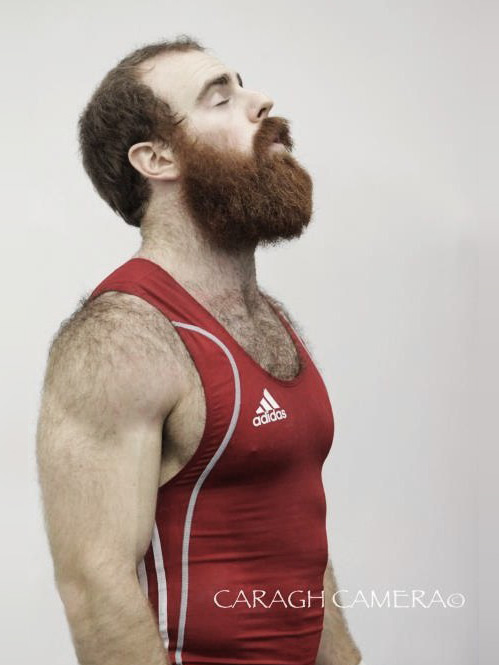
    I’m not a hipster. I’m not a lumbersexual. I’m not a grooming enthusiast. Hell, I’m barely a hygiene enthusiast…

    I get a lot of questions about my beard; fair enough, since it is a perceivable physical manifestation of biological processes existing in three-dimensional space, and is as liable to discussion as any other real or unreal thing.

    Pre-lift-CFNV2-FB
    Taking a final deep breath before stepping onto the lifting platform at the CFNV Challenge.

    But that’s pretty much the extent of it. This is just the way I look today.

    When people ask me for facial-hair advice, I don’t know what to say. Growing a beard is one of the easiest things in the world. You just stop touching your face for a few months. Your body’s basic functions will take care of the rest. In this regard, growing a beard may be even easier than pooping. Think about it.

    So many people have trouble pooping, that we have a word for it: constipation. To my knowledge, there is no such word related to beard growing, because growing a beard is easy (although, if such a word were to be required, I humbly submit “con-sti-FACE-ion” as my contribution to the lexicon).

    So, to all you self-proclaimed lumbersexuals, vagabonds (*cringe*), and manly-men: you can cut the crap.

    I used to read men’s magazines. For a while, I counted myself among the hordes that scavenged the pages for any hint at how to act, how to look. How to be myself. Which subtle combo of wristwatch, tie, and socks I should use to “make a statement” (has anyone ever figured out what that statement was, exactly?).

    I no longer subscribe to the notion that “the clothes make the man.” Or that the job title makes the man. Or that a beard makes a man. Or, for that matter, that a “man” is anything more than an XY chromosome profile.

    That guy with the impeccably manscaped chest, the epic, waxed and styled facial hair, and that ridiculous undercut man-bun? You don’t really know anything about him, other than that he’s spent a lot of money on body waxing, beard oil and barbershop appointments. Big whoop.

    This is not to disparage that man. I live and let live. Do whatever brings you joy, bro. I just don’t think we’d have much to talk about at a party. I don’t use pounds of product on my facial hair. I don’t perfume it with designer oils that were concocted by a chemist with soft hands. In reality, most of the time my beard probably smells like sweat, gym chalk, or ocean spray. This is a result of the way I choose to live my life.

    The point of this article is not to tell you how to live your life or groom your beard. The point is to provide insight into why I happen to look the way I do, and to share my personal truth:

    A beard is not itself an ambition. A beard is what happens when you’re busy with more important things.

  • Off Season Plans

    I get a lot of questions about my program and about what a yearly training cycle looks like. So this post will provide some insight into what I’m doing right now: enjoying the off-season.

    The 2015 CrossFit Games reached its explosive conclusion at the end of July. It was a jam-packed season from the start of the Open, through Regionals, and into the finals. Every year, the bar gets raised. Every year, the level of competition reaches a more feverish pitch.

    And every year, I am shocked at what I see on social media after the Games: “2016 starts NOW!”
    “Well, had a great couple days of rest, now time to start training!”
    “back to the grind!”
    This gets posted by rookies and veterans alike, to the enjoyment and approval of the online masses. Well, let me show you the less exciting side of things.

    I usually take a month off after the Games.

    Let’s clarify exactly what that means. I’m not doing “fun training.” I’m not doing a strength program. I’m not jumping into regular classes at the gym. I am taking the month off.

    Here’s the ideal structure of that time, immediately post-games:
    Week 1 – do literally (figuratively) nothing. Eat, sleep, bathe occasionally.
    Week 2 – assess and treat. Take stock of health and structural issues; see doctors, get massages, etc.
    week 3 – reintroduce light movement. Swimming, rowing, rehab and isolation drills… This is what most “normal” people do for exercise.
    week 4 – transition towards training. Start to try more typical movement patterns like weightlifting and gymnastics. No volume or intensity.

    The exact structure of this time is less important than the mindset. The goal for this month is to be totally switched off. I want to soften my focus and let go of all the dials, pulleys, and levers that I’ve been watching like a hawk all year.

    I realize that this is drastically different from what some athletes advertise. Surely, there are a range of personalities at the elite level that require different kinds of stimulation, and different protocols, to feel like they are doing the right thing to get to next year. My decision to take a month off is driven by a few factors: physical, mental, and administrative.

    Physically, I am wrecked after the Games. Many athletes are, but maybe don’t realize it. I’ve had fairly significant injuries in nearly all of my 5 years training for the Games, and the off-season is so short, the competitive season is such a whirlwind, that the only time I really have to truly stop and deload my body is right after the finals. From this perspective, a month is not very long at all. Most serious strains and pains can take 2-3 months to fully rehab. I need to give myself at least a chance to start these healing processes so that they can continue during training in the off-season. From a health and nutrition standpoint, I also like to give my body a break from the massive calorie and supplement consumption that is necessary in-season. Letting the organs and digestive tract rest is important, and really, a month is not very long for this.

    The mental category is a catch-all for social, emotional, interpersonal, and recreational factors. I like to use some time after the Games to act my age… how many 26 year-olds do you know who exercise all day, go to bed early, and avoid sugar and alcohol all year, for little-to-no money or recognition? Some of my best friends from high-school and university still live in my hometown, but I barely ever see them. The family and friends that I do see are spending most of the year watching me withdraw into the focus of my training. I don’t do any fun activities like surfing or skiing because I could end my season in a split-second accident. These are not complaints, but rather conscious sacrifices I have made in pursuit of my goals. However, the spirit can’t thrive on goals alone. So, I like to take some time to stay up late, drink beer, eat junk, and hang out. I feel this release and contrast is necessary, and can help define and feed my focus for the upcoming year.

    Administrative factors are basically all the grownup activities that get neglected during the training year. After the Games, I do my best to rebuild habits of answering emails on time, doing chores, making to-do lists, and generally trying to get my life in order (this is still a work in progress, as my girlfriend Lindsay will surely confirm). I use this down-time to reflect on my training and to brainstorm for the year ahead. What details do I need to polish this season? What changes can I make to improve? This is an organic process that lasts all year, but now is the time to take advantage of creativity, with the mind and body being free and relaxed. I also start to lay the groundwork for off-season projects: travel for events and workshops is how I support myself outside of competition. So, stay tuned to my website and social media for all the fun stuff I’m planning – maybe there will be something near you!

    At the end of the day, every athlete has different tolerance and needs. I feel that my habit of taking a month off after the Games may be slightly unorthodox, but may be instrumental to my longevity as a CrossFit competitor. As a 5-time Games athlete, having 5 months off in 5 years is actually pretty reasonable. To put things in perspective, Olympic athletes compete every 4 years; theoretically, they could take an entire year off to rest and recover, and then still have 3 whole years to train. The CrossFit season hammers harder and heavier every year, so I try to find breaks where I can, in order to stay afloat and find my time to flourish.

  • Squat Strong

    Towards the end of 2014, I helped publish SquatStrong with Cam Birtwell. It is an eBook that includes a strength program, along with a comprehensive explanation and discussion of the movements, protocols, and theories involved. We describe it on the website as, “A Revolutionary Squat Program for Strength and Power.” What exactly is so revolutionary about it?

    Simply put, it is a squat program designed for concurrent training. In other words, it is geared towards athletes competing in sports OTHER THAN powerlifting. This may not sound like much, but it is actually quite contrarian and fills a noticeable gap in the current range of popular online options. Now, there are certainly programs available that will produce results, but they may not be optimal for fitness competitors, team sports athletes, or anyone else that needs to practice a range of other skills.

    The reason these other programs may be less than ideal is that they were designed BY lifters FOR lifters. For example, I’ve seen excellent improvements in my squat using the infamous Smolov cycle, but it requires you to squat 3-4 days per week for close to 3 months. This is NOT conducive to being able to train hard in other areas like running (or walking, or getting out of bed).

    The popular Conjugate method made famous by Westside Barbell is certainly effective. However, the typical exercise selection is only appropriate for a very small demographic: the regular use of bands and chains is entirely specific to the act of lifting while wearing a powerlifting “squat suit,” or “bench shirt,” which is a piece of equipment only used by some lifters in some federations. It provides massive support in the bottom position, leading much of the training to focus on the lockout at the top position. This focus is highly sport specific and largely irrelevant for most other trainees.

    The 5/3/1 program from Wendler has also proven effective for me, and involves a much more reasonable progression… almost TOO reasonable. The single max-effort set once per week produces gains and allows other training to take place, but it takes many cycles to finally see substantial improvements, and is the type of program that you want to follow for 1-2 years without interruption. As an athlete with a dynamic, jam-packed season, I need to be able to shift my focus more rapidly and fluidly throughout the year. I need to bump up my numbers and move on to something else.

    Enter the SquatStrong program. It is 6 weeks of work, allowing you to capture some strength gains and then change your training focus if needed. It prescribes 2 sessions per week: one heavy, and one dynamic. This allows room for recovery and concurrent training for your real sport. The program includes 4 different types of squat workouts; the exercise selection is unique and varied, attacking your 1RM from a number of angles. Muscular development, neural recruitment and power, technique, and positional strength: all of these are important.

    Everything in the program, from the weekly percentage progressions, to the dynamic exercise selections and accessory work, is designed to produce the most bang for your buck. We want maximal results with minimal damage, so that we can keep kicking butt outside the squat rack. To my knowledge, this is the only program available online that accomplishes this; it is a squat program created with athletes in mind.

  • Kayak Konfessions Ep.4 – 2015 CrossFit Games

    In my video series, “Kayak Konfessions,” I spend some time on the water in peaceful reflection and share my thoughts on a variety of topics. This episode includes my impressions from the 2015 CrossFit Games.

    For me, I thought things were a bit much this year. That is, factors other than the “10 General Physical Skills” (listed in the video) were playing a significant role in the rankings. For example, if an athlete cannot continue due to heatstroke, were they really shown to be deficient in a particular area of fitness?

    However, Ben Smith and Katrin Tanja Davidsdottir produced excellent results. So does my opinion matter, if the first place man and woman were unaffected? The champions didn’t seem to have any problems. At the end of the day, perhaps this is all that matters in the eyes of “the test.”

    Whether it’s logical or not, most athletes will up their training over the next year to match the impact of this year’s Games, so look forward to some pretty beastly competitors next season (if they can survive the training)!